The Decent Homes Standard as a Direction of Travel
At the end of 2025, the UK Government concluded its consultation on a new Decent Homes Standard for all residential rented properties. For anyone planning a bespoke new home, working with a self-build architect in Bath is increasingly about designing homes that are efficient, adaptable, and built to last.
As architects in Bath working on self-build and residential projects across Bath and North East Somerset, we see these changes as highly relevant to anyone planning a new home or major renovation.
The opening statement sets the tone:
“Everyone deserves to live in a home that is safe and decent. All tenants should be able to feel proud of where they live and be treated with respect.”
The proposed standard is structured around five core criteria:
- Homes must be free of the most dangerous hazards
- Homes must be in a reasonable state of repair
- Homes must provide core facilities and services
- Homes must deliver thermal comfort
- Homes should be free of damp and mould
Alongside this sits consultation on updated Minimum Energy Efficiency Standards (MEES), including proposals for EPC Band C fabric performance and upgraded heating or smart-readiness metrics.
While these measures are not aimed directly at self-build homes, they indicate a clear direction of travel. Regulation often moves from social housing, to private rental, and eventually into wider expectations for all new homes.
We have explored many of these themes in more detail in previous articles, including Sustainable Home Design: How to Build an Eco-Friendly House and How to Make Your Home Environmentally Friendly in 2025. This post builds on those principles, looking at how they are increasingly becoming the baseline rather than the exception for self-build homes.
Why Future-Proofing a Self-Build Home Matters More Than Ever
Future-proofing a self-build home is becoming a central topic in conversations with clients.
People are moving less, staying in their homes longer, and increasingly adopting a “do not move, improve” mindset. Combined with rising energy costs, economic uncertainty, and growing awareness of climate change, homeowners are understandably focused on long-term value and comfort.
Future-proofing is not about over-engineering a home. It is about designing a house that remains efficient, adaptable, and comfortable throughout its lifespan.
Why This Is Especially Important for Self-Build Projects
Self-build homes present a unique opportunity. Decisions made early in the design process are often difficult and expensive to change later.
Common future-proofing considerations for self-build projects include:
- Long-term energy costs and performance
- Material durability and maintenance
- Low-carbon design strategies
- Flexible layouts and future extension potential
- Home working and multi-use spaces
- Multi-generational living
- Accessibility and reduced mobility over time
- Capacity for future technology upgrades
This is particularly relevant for self-build homes in and around Bath, where planning constraints, conservation considerations, and long-term value all benefit from early, well-informed design decisions.
When investing significant sums in a bespoke home, it is reasonable to expect that it will still function well in ten, twenty, or even thirty years’ time. This is where early advice from a self-build architect in Bath can add significant long-term value.
Designing Beyond Minimum Building Regulations
Building Regulations establish minimum standards for safety, accessibility, and energy performance. However, minimum standards rarely deliver the best long-term outcomes.
At TEA Architects, we take a personalised approach that considers how a home will be used over time, not just how it performs on completion.
For example, on a current self-build barn conversion in Bath and North East Somerset, designed by our team of Bath architects, the clients are planning ahead for potential reduced mobility. The design includes:
- Doorways and corridors approximately 15 percent wider than minimum standards
- Step-free access throughout the home
- Provision for a future wet room
These measures add minimal cost during the design stage but would be expensive and disruptive to retrofit later.
We also encourage adaptability rather than fixed use. Rooms designed to change function over time, such as a study becoming a bedroom or a ground-floor room supporting future care needs, increase a home’s resilience without adding complexity.
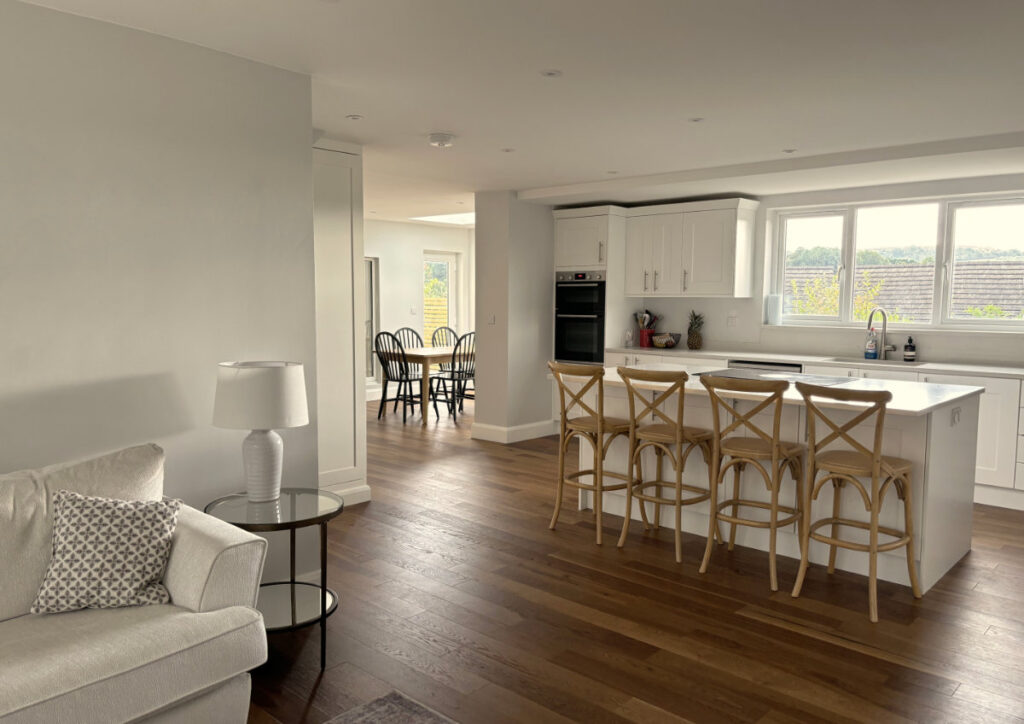
Energy Performance as the Foundation of a Future-Proof Home
Many local authorities are introducing enhanced energy standards for new homes. Even where self-build projects may be technically exempt, these standards offer a useful benchmark.
A fabric-first approach remains the most effective way to future-proof a self-build home. High insulation levels, good airtightness, sensible glazing, and careful orientation all help protect against rising energy costs and climate change.
Durability and lifecycle thinking are equally important. Future-proofing is not only about how a home performs when new, but how easily it can be maintained, repaired, and upgraded over time. Thoughtful material selection, sensible detailing, and good access to services all help a home age well.
Energy strategy must work alongside layout. Performance figures only deliver real value when they support everyday comfort and usability.
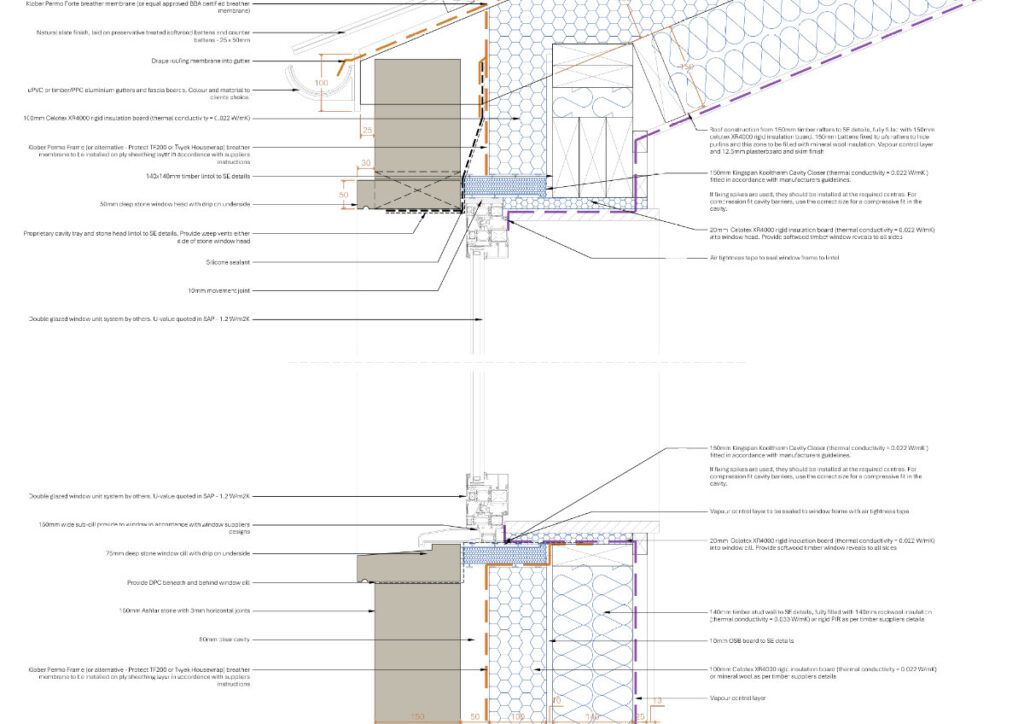
Future-Proofing Beyond Energy: Resilience, Regulation, and Resale
Future-proofing a self-build home goes beyond energy efficiency alone.
Climate resilience is increasingly important. Overheating risk, extreme rainfall, and site-specific conditions should be addressed through passive design measures such as shading, ventilation, and orientation.
Regulation is also tightening steadily. Homes designed only to meet current minimum standards risk becoming future retrofit projects. Designing ahead of regulation helps avoid unnecessary cost and disruption later.
Even for long-term homeowners, resale value and mortgageability still matter. Buyers and lenders are paying closer attention to energy performance, adaptability, and overall build quality. Homes that address these issues early are more likely to retain value.
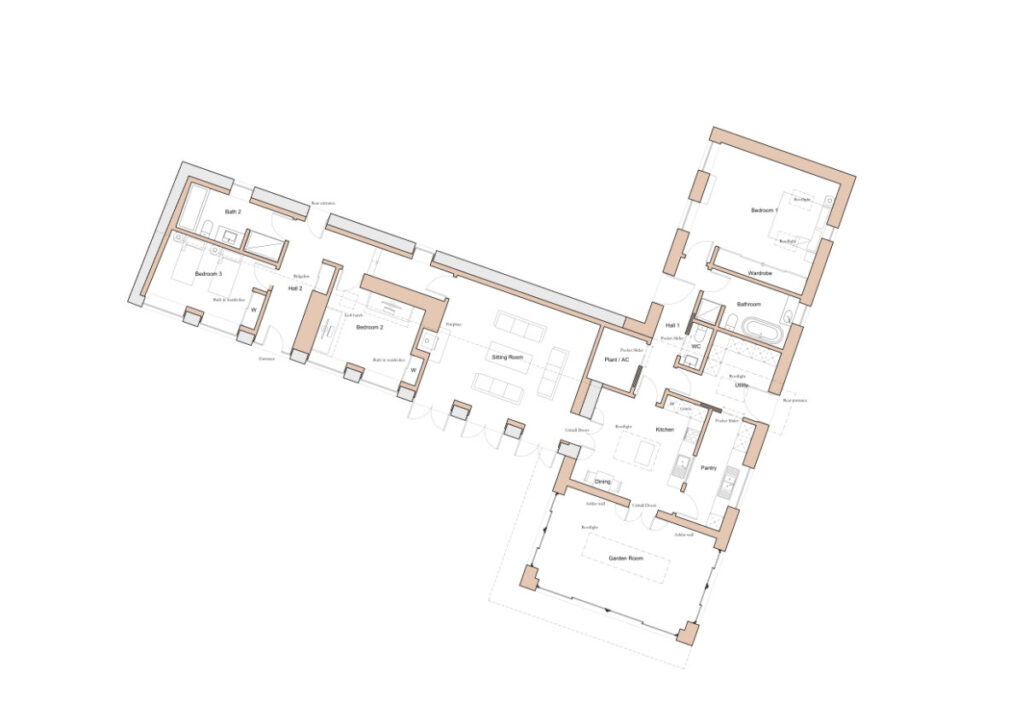
How We Future-Proof Homes as a Self-Build Architect in Bath
As a self-build architect in Bath, future-proofing is not treated as a checklist exercise within our projects, but embedded into the way we brief, design, and develop homes from the outset.
Having worked with a wide range of self-build and residential clients across Bath, Somerset, and the South West, we understand that most concerns around future-proofing stem from uncertainty. Clients want confidence that the decisions they make today will still feel right years down the line.
Starting with a detailed and forward-looking brief
Every project begins with a detailed brief that explores not just how a home needs to work now, but how it may need to adapt in the future. This includes conversations around lifestyle changes, working patterns, family growth, ageing, and long-term ownership intentions.
By understanding these factors early, we can design homes that feel bespoke without being overly specific, allowing for flexibility without compromising clarity or quality.
Designing layouts that prioritise flexibility and comfort
Space planning plays a critical role in future-proofing. We deliberately avoid designing to minimum room sizes wherever possible, as tight layouts often restrict flexibility and are less forgiving over time.
Our approach considers:
- how rooms might change function
- how furniture can be arranged in multiple ways
- how circulation spaces can remain generous and accessible
This creates homes that feel comfortable from day one and adaptable as needs evolve.
Integrating performance, services, and technology early
Energy strategy, servicing, and technology are considered alongside layout rather than added later. By coordinating fabric performance, ventilation, heating, and electrical infrastructure early in the design process, we help ensure homes are efficient, comfortable, and capable of accommodating future upgrades.
Managing cost certainty and long-term value
Future-proofing must remain proportionate. We encourage early cost planning once a design direction is established, allowing informed decisions to be made around initial investment versus long-term running costs.
Where appropriate, we also draw on our experience of residential development and local market knowledge to help clients understand how design decisions may affect long-term value, appeal, and resale.
A balanced, architect-led approach
Ultimately, future-proofing is about balance. It requires judgement, experience, and an understanding of when to push beyond minimum standards and when simplicity is the better option.
Our role as architects is to guide clients through these decisions, ensuring their homes are robust, adaptable, and enjoyable places to live for many years to come.
Questions to Consider When Future-Proofing a Self-Build Home
When planning a self-build home, future-proofing is most effective when considered early in the design process. Useful questions to ask at the outset include:
- How might the way we use this home change over the next 10 to 20 years?
- Are key spaces flexible enough to adapt without major alterations?
- Does the layout allow for accessibility if mobility changes?
- Is the building fabric robust enough to meet future energy standards?
- Can services and technology be upgraded without significant disruption?
- Would this home still be attractive to a future buyer or lender?
Addressing these questions early helps ensure future-proofing is integrated naturally into the design, rather than added later at greater cost.
Future-Proofing as Common Sense Design
Future-proofing a self-build home is ultimately about reducing future risk rather than adding unnecessary features. It helps avoid costly retrofits, regulatory non-compliance, and functional obsolescence.
Starting these conversations early is key. Increasingly, future-proofing is not an optional extra, but a fundamental part of good residential design.
Author bio
Written by TEA Architects, a Bath-based architecture practice specialising in self-build homes, extensions, and residential projects across the South West.